The New Raycast
Introducing the next generation of Raycast for macOS.
 Thomas Paul Mann
We've been quiet for a while. Some of you even asked if we were okay. We were just busy. Today you'll see why.
Toward the end of last year, we teased something we'd been working on for a long time. Now you can finally get your hands on it: a brand new Raycast, rebuilt from the ground up for the next era of personal computing. It's in public beta as of today and you can try it out here.
A new look and feel
The first thing you'll notice is that every pixel is new. This version is built to sit naturally inside macOS Tahoe while preserving the professional feel that long-time users care about. Liquid Glass is used in tasteful ways to enhance the functional nature of a launcher. The app stays familiar and feels fresh at the same time.
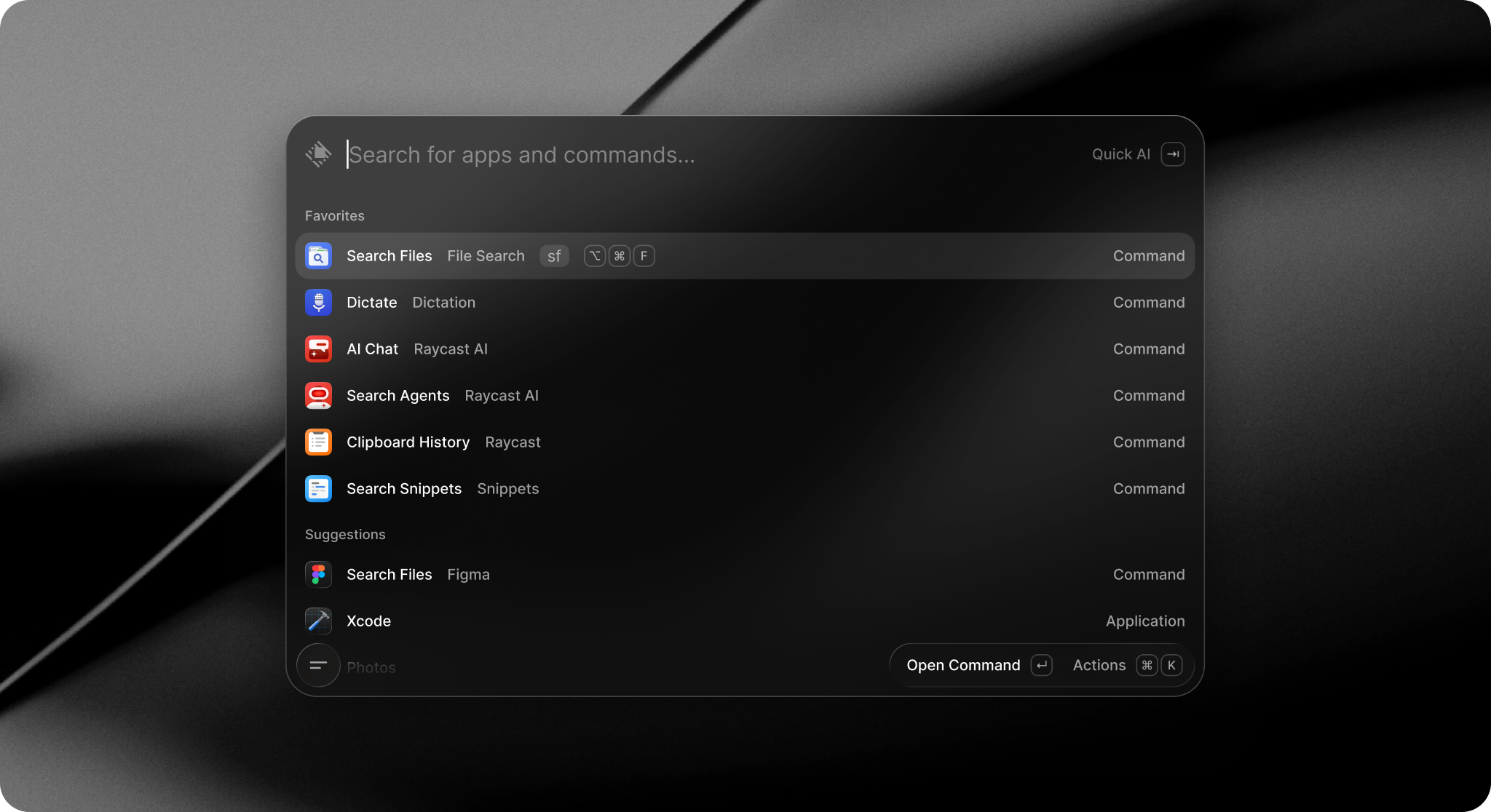
It's the kind of change that's hard to describe in a paragraph. The best thing to do is open it and use it for a day or two. It just feels great.
The features you've been asking for
We also took this opportunity to fix things you've been asking for, in some cases for years.
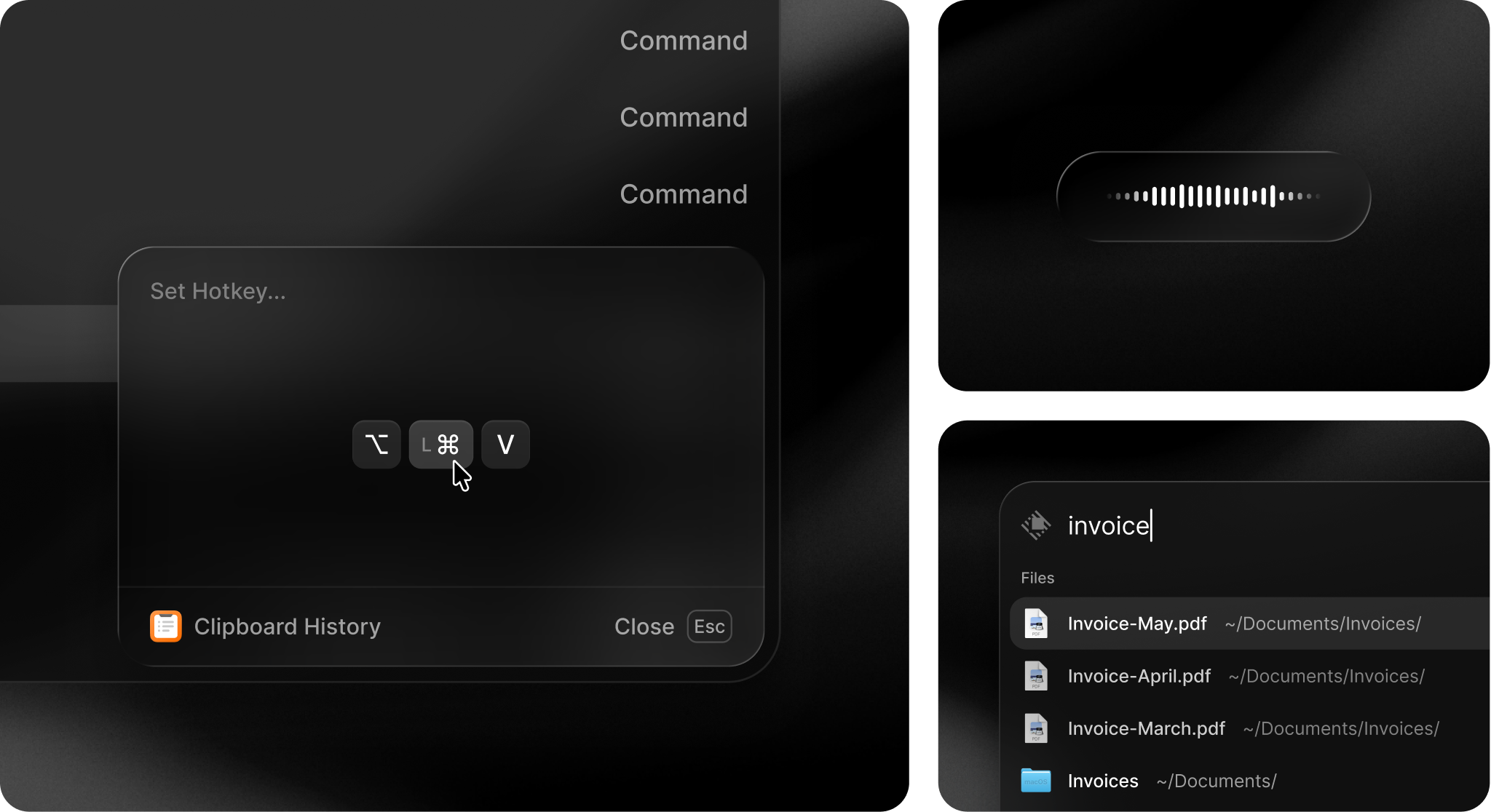
Files, folders, and contacts now show up alongside commands and apps in Root Search. To hit our bar for responsiveness, we built our own indexer from scratch instead of relying on Spotlight, which never gave us the speed or consistency we needed. It scans your entire disk in seconds and keeps results fresh as things change. The thing you're looking for is usually just one or two letters away.
Dictation is now built right into Raycast. Hold a hotkey, talk, and the text shows up wherever your cursor is. It works system-wide, picks up your spellings and let you alter your tone of voice per app. During the beta, global dictation is free for everyone.
Hotkeys are core to how people use Raycast. The new recorder adds support for single-tap modifiers like fn, lets you bind left and right modifiers separately, and properly handles international keyboards. Small detail, but you press hotkeys often enough that it matters.
AI that fits how you work
The way people use AI has shifted a lot since we first added it to Raycast in February 2023, and the surfaces inside the app needed to catch up.
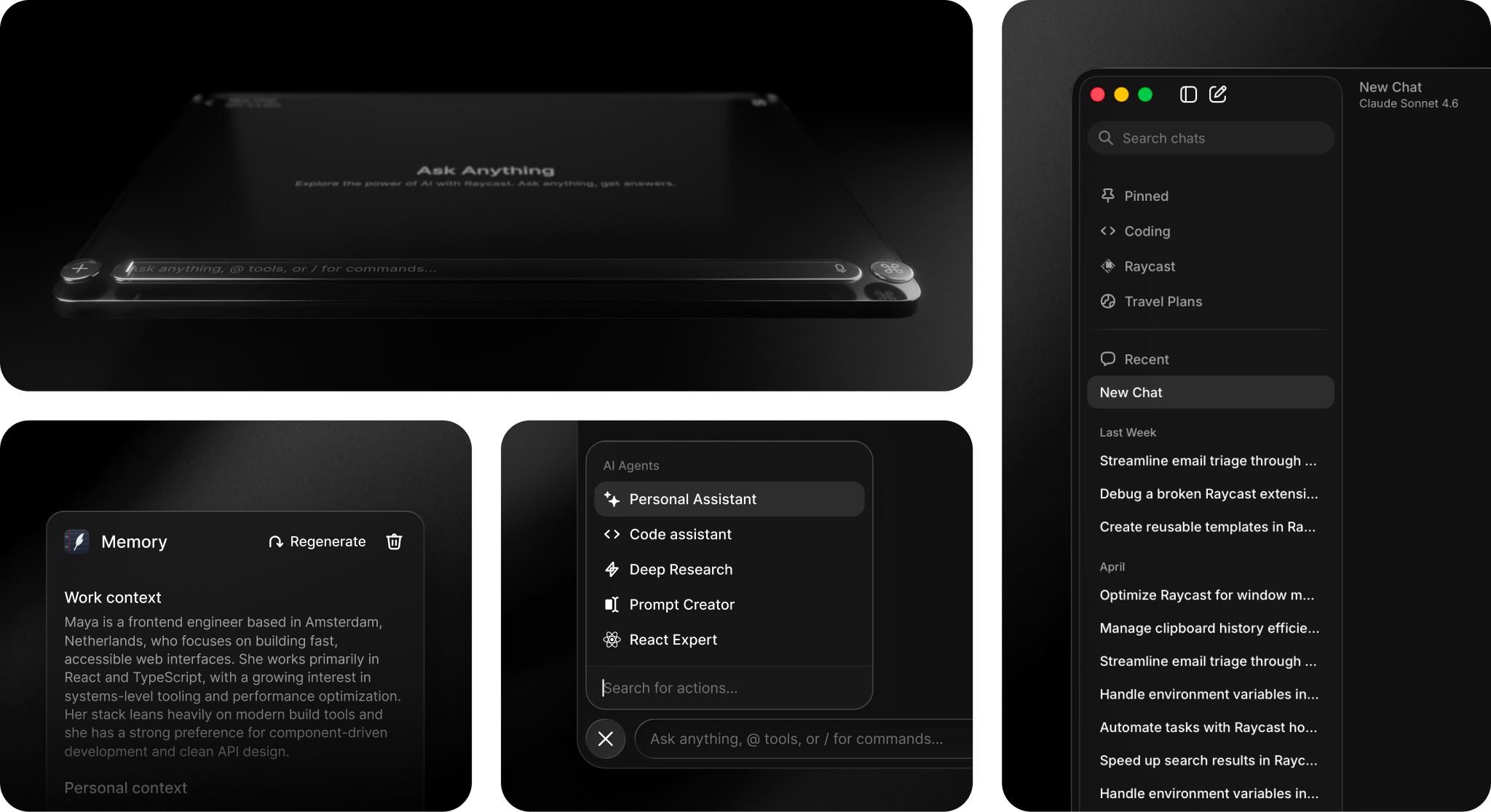
Quick AI is the fastest way to ask one-off questions: Open Raycast. Type. Hit tab and get your answer. AI Chat is for the longer back-and-forth. We brought them closer together: the same composer powers both, so going from a quick question into a full conversation feels smoother.
Raycast now remembers context from previous conversations, so you're not starting from scratch every time. Skills installed on your Mac load automatically, so anything you've taught another agent is available in AI Chat as well. A brand new Profile lets you customize how the AI talks and behaves. And as before, you have access to models from every major provider in one place, with OpenAI's GPT-5.4 mini free during the beta.
The small stuff
A redesign is a chance to revisit the things people touch every day. We took it. Here's a list of smaller quality of life improvements worth highlighting amongst many more:
- Snippets, Quicklinks, and AI Commands now support tags, which makes a few hundred of them actually manageable.
- Clipboard History now captures every original format you copied, which preserves formatting in apps like Slack or Notion.
- Translator lets you set up custom commands for your most-used language pairs, making it even faster to use.
- Window Management got a new Toggle Grid Overlay command that lets you position and size your windows visually.
- Settings got a whole revamp making it easier and more consistent to configure Raycast to your exact needs.
While none of these are headline features on their own, they're the part of the app you'll feel within a week of switching. Plus, there are many more small improvements that you'll discover over time.
What's not in yet
Honest caveat: this is a beta, and a few things from the current Raycast aren't here yet. Cloud Sync is the one we know you'll miss most. Smaller things like larger font sizes and local LLMs are also still on the way. All of it is coming during the beta.
To make the trade worthwhile, a bunch of usually-paid things are free during the beta: OpenAI's GPT-5.4 mini, global dictation, and several Pro features. In exchange, tell us what needs improving. Feedback right now is more useful to us than at any other point in Raycast's life.
A note on what took so long
The reason this took as long as it did is that we didn't just redesign the app. We rebuilt the foundation under it to make sure the app is faster on every aspect we care about. Going forward, this also lets the whole company contribute. If you want the real story of how it's built, we wrote a separate technical post that goes into more details.
Thank you for sticking with us through the quiet months. The first version of Raycast was the start. This one feels like the real beginning, and we're glad to finally share it with you.